Performance anxieties
There is a real cost to indie filmmakers playing by the rules of the influencer class, which are just as demanding, capricious, and soul killing as any Hollywood rodeo.


It’s 2026, so forgive me for being skeptical whenever someone suggests that the Internet is the path to freedom and prosperity in any field. Silicon Valley already burned down the economic model for film and TV, leaving Hollywood in tatters as it tries to deliver billions of dollars of entertainment every month for the price of a single movie ticket. And only the most craven grifters pretend social media didn’t break our brains, along with our schools, news, politics, culture and communities. But don’t worry, the stock market is soaring, and we’ll fix everything with smarter posts.
People are waking up to the shitshow, and eager to at least start talking about how to repair the damage. Ted Hope is no longer a one man band hunting for a better path forward for the film industry, and #FilmStack is full of exciting ideas about new approaches and models to rescue indie filmmaking, which is indistinguishable from rescuing the medium. The studios will never admit that they need outsiders to save them from themselves every 30 or 40 years.
A popular refrain around here is to learn from the likes of Mr. Beast, and other juggernaut content creators in testing work and building an audience. To which I say, filmmakers have already been doing that for years, and it hasn’t founded a Renaissance. It got us here. This also skips the part where those big, bad gatekeepers are reluctant to open the door to anyone without a huge online following already in hand. Film folks have been trying to be Mr. Beast for a mighty long time.
Just for trolls, no one is owed a career in the arts. It’s always been an uphill battle, and most people who prevail have the relationships and financial resources to weather the vagaries of so fickle a profession. And thanks to the tech oligarchy, fewer people can support themselves in the arts because they stole music, TV and movies and trained the public to expect their pop culture for free or at such a low price, the business was bound to contract, if not go bust. People love to point out that politics is downstream from culture, but they always seem to forget that culture is often downstream of economics.
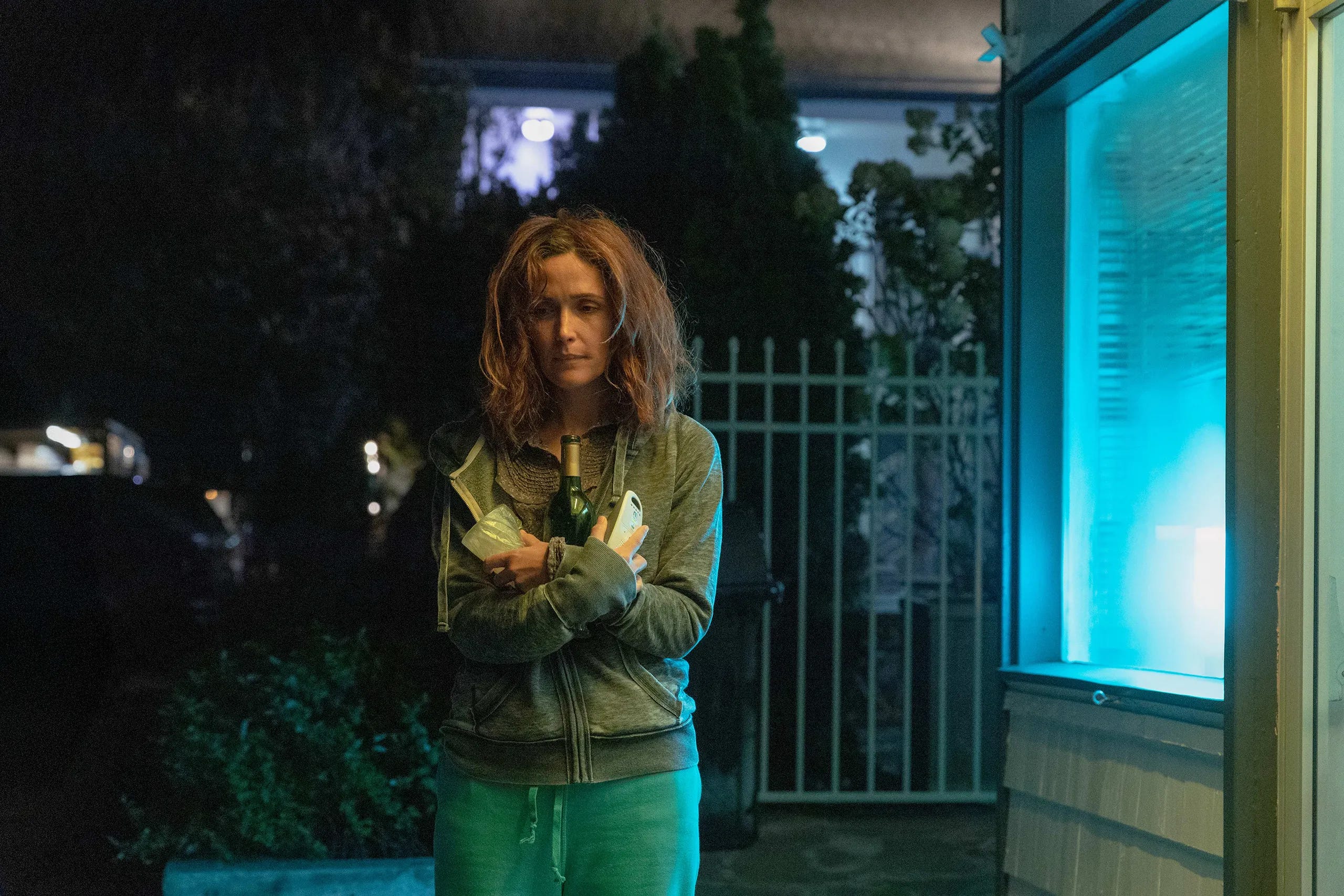
And for the culture industries, the economics of this era are nasty, brutish and meager. For every Mr. Beast or OnlyFans mogul the vast majority make little to nothing for their relentless effort. Algorithms can bury great work, and as folksy as some creators are, there is still a cold-blooded machine churning behind them. In one brilliant scene from the HBO series I LOVE LA, a mega-influencer reveals she’s not just snapping selfies, she has a handful of geeks chained to their desks goosing her engagement numbers. Thankfully, it debuted last year so the reveal is registered as a horrific, rather than cool.
This is where someone treats this situation as simply how things are, like gravity, hurricanes or the perpetual failure of the Detroit Lions. “Adapt or die” has been a constant refrain for decades, with Bill Clinton wrapping it up as cornpone advice and Sam Altman taking it as a sacred oath to make sure the world is so bereft of joy and meaning that death seems like a treat.
I’m still being told this is progress.
Forgive me, but there’s nothing punk, cool, countercultural or remotely rebellious in accepting this hellscape as the only way forward. But it’s not just a matter of principle or values. Reality has a say here. Not the one sold by the tech overlords, but the undeniable one.
We do not have unlimited days, weeks or years. So many of us are already our own manager, development exec, financier, PR maven, etc. And this is in addition to whatever work we do that compensates us financially. Now, let’s add influencer to the mix. We’ll still call you a filmmaker, but make no mistake, get those socials up. I’m sure the working mothers love the idea of finding time to both be creative and relentlessly post about it.
This grind favors the single, the wealthy and the anti-social. As much as I do want us all to be more resilient in the face of criticism and rejection, myself included, there’s a natural amount of ill will and abuse laced into posting online as an influencer. And the best at it almost feed off the negative feedback, for the sheer attention, no matter the nature. They are bulletproof to the thoughts and feelings of others. Pretty badass, right?
Unfortunately we have no evidence that scaring off or burying the more self-aware, sensitive talents from public life has had any adverse effects on business, politics or the arts.
Besides, the people who truly care about filmmaking will make the time to add this to their list. What’s to lose?
Time. The time to work on the craft. Watch more films. Read books for research or just curiosity. Fall in love. Care for a parent. Travel. Attend a sumo wrestling match or a protest. Meet actual potential collaborators in real life and find out who they really are, and start trying out that relationship with a small project.
People wonder why movies seem so internet-brained and unsatisfying, but who in the industry has the time to be anywhere but online? To see the world and report back? But no, the solution is often the subtle implication to spend more time in front of a screen, all alone, trying to get the attention of lonely souls on the other side.
The future rocks.
There’s that old, perfectly valid advice that young artists need some time to live life enough to inform their work, but too many lives are one decades-long doomscroll. Too many people want to treat this is a moral failing of generations, when this is the world we built, or at least surrendered to, because my sense is the same assholes telling kids to get off their phones are also the ones that lined their pockets by dismantling the public square, the social safety net, living wages and the very idea of community.
Rich lives feed rich work. Rich in the broadest sense of the word, in experience and reflection. Werner Herzog once traipsed across nearly two countries by foot to see a dying friend, and I’m sorry, there’s no way that doesn’t rewire one’s consciousness.
But that still requires a certain amount of financial security. It takes rest to dream up new plots or even hear one’s inner voice. And it probably takes even longer now, given how we’ve been drowning in other people’s thoughts for so long.
And this is where, even if that lucky soul has all the time in the world, the influencer model can still damage the best of themselves. I’m still baffled that more people don’t notice the ill effects to committing to that personal brand, via the influencer model.
Brands do matter. They are a shorthand, and despite all those rabid Marxist critiques, the free market will likely survive. The great brands are clear, but still offer a big tent. A24 releases MARTY SUPREME, EDDINGTON and SORRY BABY in one year and none of them feel like an outlier. But that’s a company with a POV, and not a person. Personal brands seem savvy because it does streamline the sales pitch for themselves, but let me ask a question here.
What gets buried because it doesn’t serve the brand? How much do we sand down ourselves to sell that image? It’s true every truly successful creative professional has their own brand, from John Carpenter to Sally Rooney to Prince. Even if they skip around genres, the greats develop a voice that’s easily recognizable no matter what it expresses. What’s the difference? Those brands were built on their creations. Not daily nibbles of their lives.
It’s true the old gossip rags acted like the pre-Internet, doling out glimpses of the private lives of celebrities for hungry fans, but it also rested on the quaint idea that celebrities had a life off-stage. Now a camera and the microphone are never more than a foot away, a little passive aggressive paparazzi gang staring at us for comment on everything from our sister’s cringe sweater to the Iranian protests.
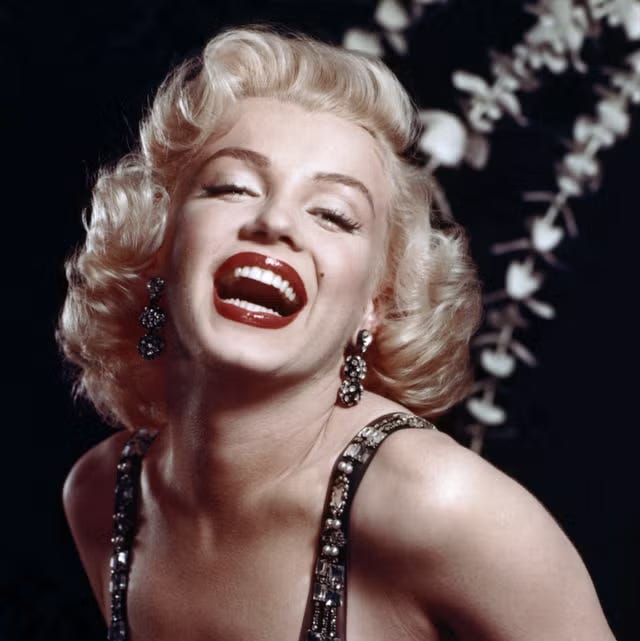
There is no off stage now. And that’s not just a change in degree. The fact that Norma Jean got lost in her persona of Marilyn Monroe has always been framed as a tragedy, and yet, our most financially rewarding work in pop culture demands the death of all our Norma Jeans.
So we’re told to build our brand relentlessly, by connecting what we make to who we are. That sounds benign, even noble, but in practice it’s deeply destructive. I’ll acknowledge that lots of people do love mining their biography and are happy to produce a body of work that might be considered one long memoir. But there are plenty of us that fell in love with the arts to use our imagination, not the worst days of our lives.
A lot of the personal brand activity is repackaging trauma as resume builders. It used to be just the college entrance essay that required us to explain overcoming our “challenges,” i.e., weathering our personal tragedies. But now nearly every grant and fellowship demand the personal essay and manifesto, which frequently boils down to reporting the lousiest elements of our lives. My wife is a screenwriter as well, and many times a year, she’s left dragging out her bipolar father in the application process to prove she’s worthy of writing dramedies about troubled families.
I was once at CAA after winning a prestigious award for writing a thriller set in Iraq, based on my work on a documentary that was eventually cancelled. The process involved interviewing soldiers, diplomats and Iraqi refugees, and the research clearly did the trick, as the agent had asked how long I served. Their face fell when I explained I never had. The delicious twist is that I was military bound as broke ass teenager until a teacher slapped me upside the head and told me I was a writer, helping me be part of the first generation of my family to attend college.
To be clear, this is not some swipe at prioritizing marginalized groups, but I can’t help but notice that at the exact time we start making efforts to have women and BIPOC step into the spotlight, we ask for their woes as an entry fee. All this has the best of intentions, but it can’t help but shrink people down to their afflictions. And again, it’s all part of this larger, more pervasive effort to stuff our lives into a branding exercise.
Screenwriters in particular are now tapped as much for what happened to them as to what they write about, and that makes building a body of work difficult. If we are only as compelling as our biographies, then we truly are disposable after a single project. We don’t like to think that way, because it’s far too grim. Somehow they rarely ask the established white dudes to prove they fought wars or ate ketchup sandwiches.
I always chuckle when some reporter or fan assumes that author or filmmaker has some direct personal connection to the actual events of the story. I still don’t know how Alan Pakula made ALL THE PRESIDENT’S MEN when he didn’t personally crack the Watergate story. Maybe Bob Woodward would have done a better job behind the camera. No doubt Woodward thinks so.
What’s so frustrating is that we all naturally mine our own experiences for the work already. Our genre interests can be traced back to our childhoods and we all notice when traces of real friends and family dynamics creep into that raunchy comedy or medieval epic.
At its root, the influencer model isn’t asking us to use our lives in our work, it’s about turning our lives into the work. And that means putting a life up where it can be judged. It’s choosing to perform our lives in front of a live online audience. And if we can be judged, the most natural thing to is to want to control that judgement. That’s how so many influencers end up caricatures of their early selves, if they don’t mutate into something new and malevolent just to keep the views soaring.
The cost of reshaping ourselves to court the crowd are real. My mother was a compulsive liar with a cruel streak that would horrify Peckinpah, but with time, I understood her. She lied to stay relevant and liked by everyone, and so she invented whatever tale would curry their favor. She talked relentlessly as a tic, echoing that influencer in I LOVE LA that believes if she stops posting, she’ll cease to exist. It also left Mom at the mercy of anyone’s opinion, and she took out that lack of control out on anyone that was contractually obligated to stick around, i.e., her family. Time, with its losses, have bleached away her malice, but there’s an emptiness to her that still unnerves me. Let’s call her an amateur, analog influencer. And a cautionary tale.
The influencer model forgets that there are plenty of elements of our lives that simply don’t apply to the work that we do. The only things I’ve spent as much time as filmmaking are boxing and financial journalism, and how can I say this? I don’t want to write the next ROCKY or a reboot of BILLIONS. But both fed who I am, and how I look at the world, including a deep skepticism of the narratives sold by Wall Street and Silicon Valley.
It’s not simply day jobs or hobbies that can break our brand discipline, but our own eclectic tastes. I write thrillers that range from crime to full blown horror, but my three favorite movies of the year were SORRY, BABY, EEPHUS and ONE BATTLE AFTER ANOTHER. Talk about off-fucking brand. Like how I’ve watched Lynch’s THE STRAIGHT STORY more times than MUHOLLAND DRIVE.
I know I’d be better off dusting off my Iron Maiden albums, getting a few more tattoos and sharing my hot take on the SCREAM 7 boycott.
But would any of that make me a better filmmaker? It would make me a better influencer, and I’m more than willing to admit to great influencers are talents in their medium. The persona building and crafting, the savvy to know when to pivot content to where the audience is headed or stick it out until that devoted audience is cultivated.
The no-budget look sells authenticity here. The feel of a great hang one afternoon, complete with conversational dead-ends and failed gags. All of it is impressive but disconnected from the craft of seducing people to spend their time delving into traditional TV and movies.
It’s a distinct skill set that I don’t believe translates into those necessary to be the next Spike Lee, Greta Gerwig or Chris Nolan. There may be exceptions, but that hardly makes it wise advice for the rest of us who lack the interest or inclination to play this game. And it abandons the development of the skills we do need to hone as filmmakers.
This is not a manifesto about placing ourselves above self-promotion and audiences. I fully endorse Franklin Leonard’s case for selling out, which isn’t about auctioning off our private lives but about the responsibility we have to emotionally engage other people with our work. It’s the goddamn job.
And we do need to promote our work- a habit that I will admit to being grossly negligent about. Mainly because I, even after all these years in the business, still feel that it’s about tooting my horn, and I’m not alone in cringing at such toots or even my horn. But we should make the case for our work, share it, welcome feedback, process it, and begin again. It is directed outward, at building a team of collaborators and an audience.
It’s a modern cliché that we need to spend more time with real people in real life. But we do, we need to forge communities, and the influencer gig drags us in the opposite direction. It demands more time thinking about ourselves, and how they relate to algorithms. Less time thinking about how to craft work that better serves that audience, which is made of other people.
Silicon Valley hates this fact, and the streaming model’s primary appeal to management is making the audience irrelevant, which may warrant its own essay. But if we learn how to effectively build a community of collaborators, that community can eventually build new institutions, ones that are more closely tied to the tastes and desires of the audience, and one that manages to nurture and sustain creatives again.
Institutions have become a dirty word these days, and their failures warrant that ire. But the madness of this moment brings in sharp focus the desperate need for them. Newspapers that are as important as the people they cover, so journalists (or even culture writers) don’t need to play sycophants for access. Studios used to spread the risk of any given project across a slate of projects and shepherd new ideas and filmmakers, letting folks graduate stage by stage to bigger and bigger budgets. Studios had marketing departments that treated that as its own art, rather than another task delegated to the filmmakers, along with development, distribution, etc.
That’s perhaps why I hate the idea of the influencer model the most. It’s hiding institutional greed and decay under the veneer of a DIY ethos, a fact that Chris Gethert recently called out in stand-up comedy. The responsibilities of labor only grow, and those for capital only shrink. A few rebels scattered across the country are not going to change this unless we learn to band together and build institutions beyond our individual ambitions. And that won’t be developed while playing the role of an influencer.
You’ll note that all of that is about the work. The thing. The short. The logline. The script. The pitch deck. It’s putting some boundaries up to have the freedom to live our lives and take a few seconds to not be performers. To be ourselves. Go knit booties after posting the splatter punk short story about chicken farming or hit the Gwar show after hosting a reading of one’s latest family friendly holiday flick. Think about it as protecting an off stage self. It used to be called a private life.
Maybe that doesn’t matter anymore, and in today’s world, the all-consuming grind is the only path to freedom. Except I’d argue that our private lives are absolutely essential to doing great work, especially all the interests, detours and relationships that have zero to do with our projects. Other people shock us. Other subjects open whole new worlds to explore. Those off-brand interests that seduce us can reveal to new shades of ourselves. Care-taking of others, with its requisite attention and patience, kills self-consciousness like a miracle drug. Anyone raising a family knows this, and we should do more to support creatives that do.
All these “time-wasters” are precisely what nurtures us in ways I may not be able to map, but I can sense in real time. I know we’re desperate to rebuild our culture in ways that are sustainable for workers and riveting for audiences. We can use the tools of those tech bros, but we should avoid their tactics and assumptions, because we can all trace how they led to the crisis we’re currently facing. And look, maybe a better balanced approach to film striving won’t make any of us the next PTA or Celine Song. But I’d bet we’d feel alive, which is why I chose this path in first place.
Good read! I have multiple established filmmaker clients with long resumes leaving the old system for a new approach - one that is purely material driven and self financed or distributed. Ted Hope is a big part of that world as you know.